

What is ingress protection in the context of Control Panels
Once installed, you don’t have to think about ingress protection again.
“I want an IP rated panel.”
It’s a request we hear all the time. Behind that simple sentence, though, is a whole world of choice – and the right decision can be the difference between a panel that runs reliably for decades and one that struggles from day one.
When a customer tells us they “want an IP‑rated panel”, our first job is to unpack that phrase. Where will it live? How is the area cleaned? Is there process dust? Could someone direct a hose at it? Only once we understand the real‑world environment do those two digits turn from a guess into an engineered decision.
There is a balance to strike. A higher IP rating isn’t automatically “better”: the tighter you seal an enclosure, the more carefully you have to manage heat. A beautifully sealed IP65 panel that runs too hot is no more reliable than an under‑specified IP31 panel in a damp plantroom. That’s why we always consider ingress protection and thermal performance together, in line with the verification requirements of BS EN 61439.
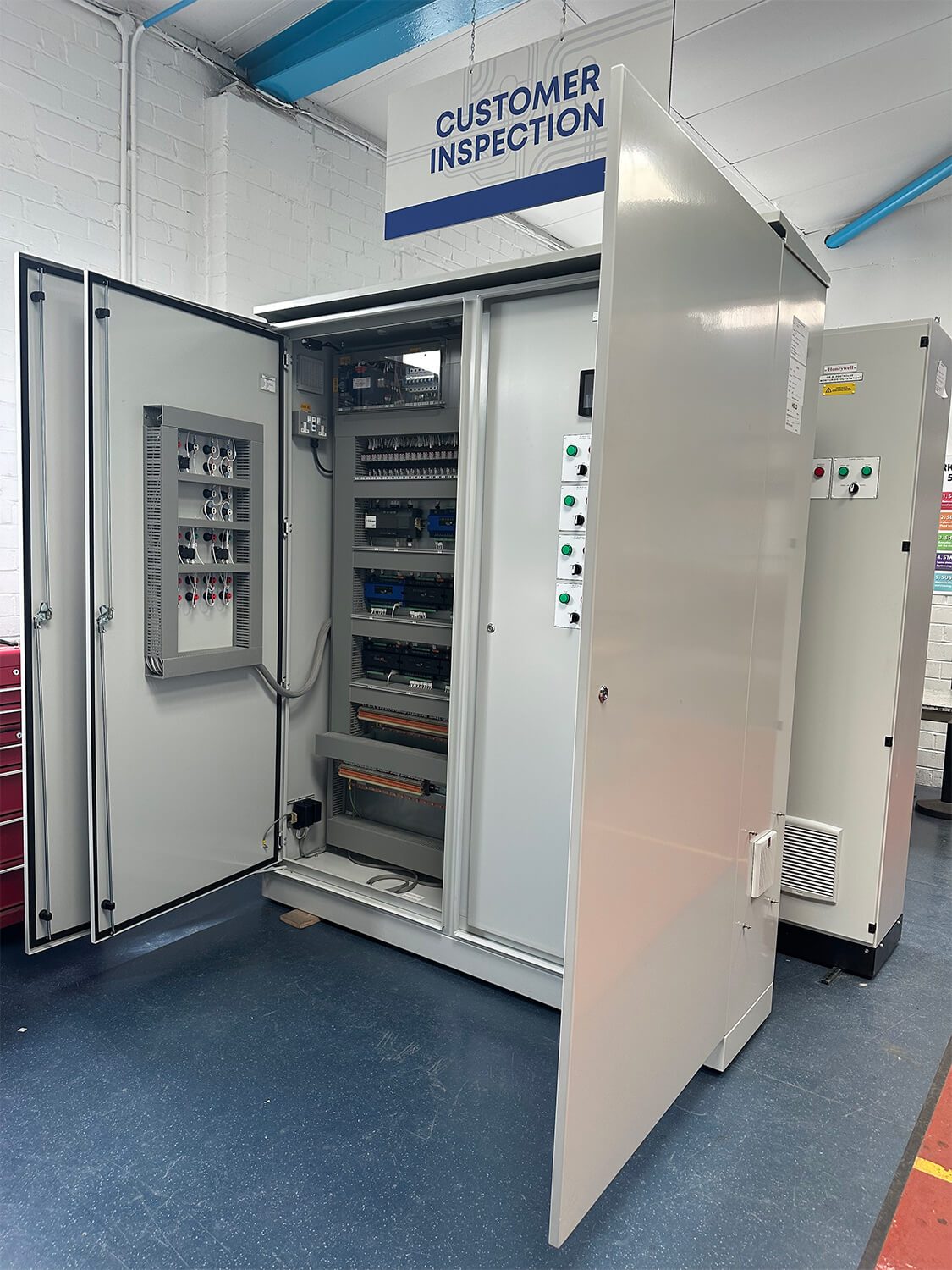
In your plantroom, that might mean an IP54 motor control centre handling dust and the odd splash. On your external gantry, it might mean a large IP65 panel shrugging off wind‑driven rain and periodic jet washing. Our role at Bensons is to translate “I want an IP‑rated panel” into a control solution that is tested, documented and proven for the environment it will actually see – so that, once installed, you don’t have to think about ingress protection again.
At first glance, IP ratings can look like just another line on a data sheet. IP54, IP55, IP65… two letters, two numbers, and a tick‑box on a specification. But in the environments our panels actually work in – noisy plantrooms, damp basements, exposed rooftops and washdown areas – those two numbers are quietly doing the heavy lifting that keeps your process online.
The first digit is all about solids: fingers, tools, dust. The second looks after liquids: from light splashes to powerful water jets.
An IP54 panel, for example, is protected against dust and splashing water – ideal for many industrial indoor spaces where there’s airborne debris and the occasional hose nearby. Step up to IP55 and you gain protection against low‑pressure water jets, a common requirement where housekeeping involves more enthusiastic wash‑downs. Push further to IP65 and you’re into dust‑tight territory with robust defense against jets of water – exactly what you need for fully exposed outdoor plant or areas regularly cleaned with a lance.
Making the “right” IP choice
More IP is not automatically better; a highly sealed panel will generally run hotter, so enclosure selection should always consider both ingress and heat dissipation in line with BS EN 61439 temperature‑rise requirements.
The right answer comes from understanding the actual environment – dust level, cleaning regime, location and criticality – and then selecting and testing an enclosure system that provides proven protection over the life of the installation.
Celebrating 60 Years of Bensons
From its beginnings in 1966 to the business it is today, discover the people, projects and progress behind 60 years of Bensons.
Matthew Barton named among Make UK 130 Honours
We’re proud to celebrate Operations Director Matthew Barton, who has received his certificate after being selected for the Make UK 130 Honours. The recognition celebrates 130 people whose leadership, expertise and contributions are helping to shape the future of UK manufacturing.
Welcoming our tenth engineering apprentice
We’re proud to welcome Alex as he begins a Level 3 Engineering Fitter apprenticeship and becomes the tenth apprentice supported by Bensons.
Implementing AI at Bensons
Bensons is embracing AI for continuous improvement by training a cross-functional team through the Applied AI for Manufacturing Diploma. Led by Prof Richard Hill, this initiative focuses on deploying practical AI applications to boost productivity and customer value.
Need to discuss your perfect Control Panel solution? Simply fill in the form with your details and requirements and we'll be in touch!